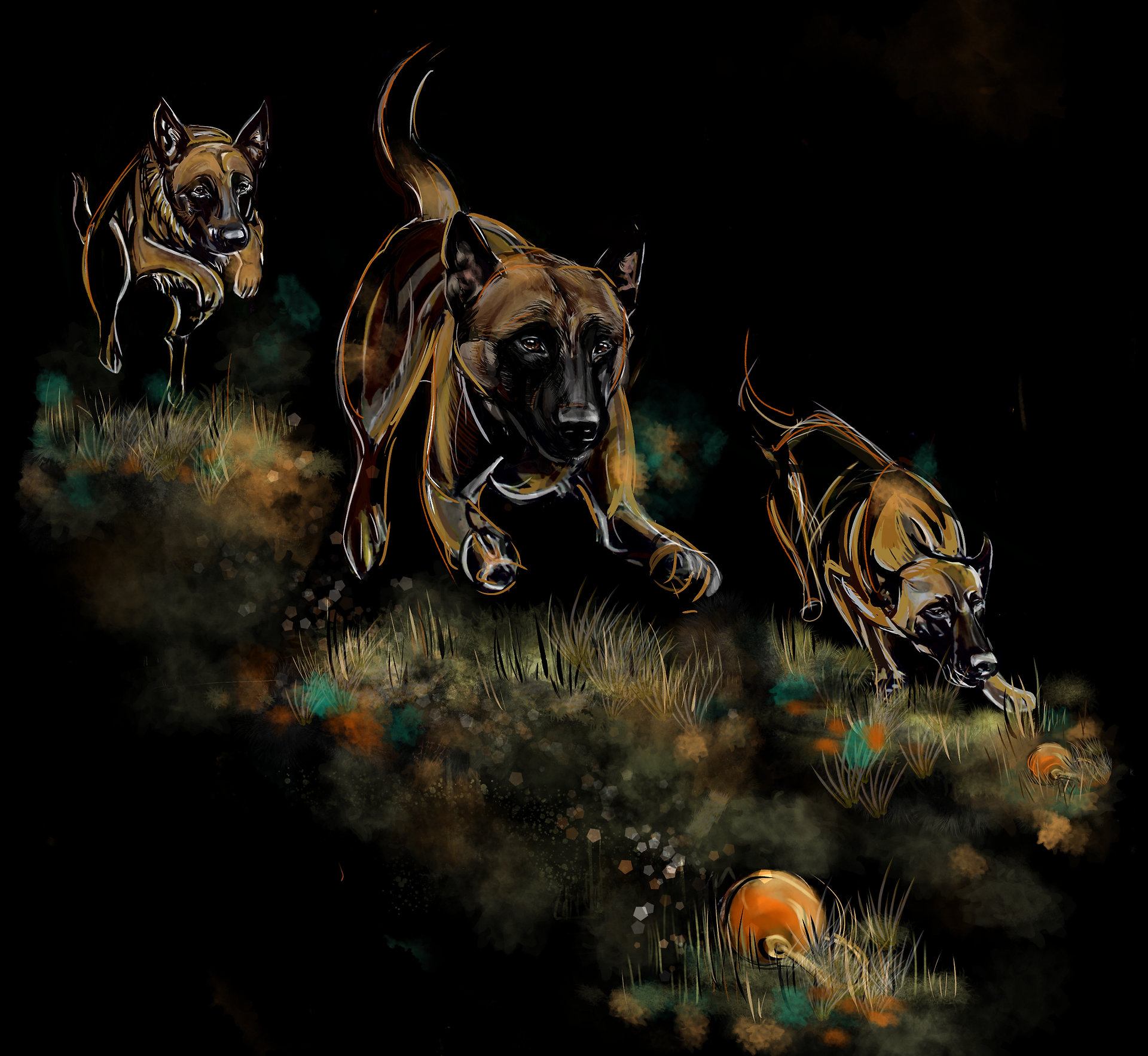
Why hard tugging dogs don’t retrieve?
Why hard tugging dogs don’t retrieve?
When looking at the comments under my last Motivational Monday post one comment brought my attention. Apparently, when you do play tug it is more difficult to teach the dog to bring toys or objects back to you hand... Why is the retrieve is so important in our play?
Just quick reminder: Our Successful Play Formula is built from these 3 components:
-desire
-retrieve
-release
All of them are important and should not be ignored. If you discredit one of them it can affect another one. Let me explain and give one example: if you will not pay attention to building motivation and willingness to release off the toy while playing and you will decide to force it that may affect overall motivation and desire to play. Today we will focus on the retrieve part.
First of all, thank you for paying attention to retrieve! It is so often discredited skill in our play and life. And truth to be said I see plenty of dogs tugging crazily but as soon as they manage to win the toy the last thing they want is to bring it back!
In play if your dog does not retrieve the toy after winning it and shoots off with the toy running around or avoiding to be caught you have only one repetition of whatever you are doing. Not very efficient way of training isn’t it? You need your dog and toy back in order to continue. And it is no a secret we need quite a lot of repetitions in order to train our dog efficiently.
Do I need retrieve in everyday life?
My dog likes to pick up random shit on walks that are not always good or even safe. In the house he has a little sock fetish and I promise you he came to me this way LOL. If you try to take the sock off his mouth he will eat it in in a split of a second. He is also what we would call historically a ‘possessive dog’ that will get random objects or bones and try to keep them to himself and would growl at anyone coming close to them. Instead of getting upset with his weird sock desires or let’s call it possessiveness, I decided to build motivation to what I call ‘an alternative behaviour to unwanted one’. In this case it is retrieve! I can ask him to bring back socks, toys,, bones or even food what reduced my dog's stress level and changed emotions associated with 'having' those objects.
Retrieve in my opinion is not only a useful skill (yes, you can teach your dog to bring a beer form the fridge!) but also it is a reflection of your relationship with your dog. Your dog should be happy to bring back anything without conflict or bad emotions. Regardless if it is a random object or a toy.
In play Retrieve is also an indicator of the interactive nature of the play. If dog does not bring the toy back to the hand that would suggest he/she may not enjoy interaction with the handler that much. Maybe there is too much pressure, not enough winning or my game is just boring for my dog. If my dog does not trow himself back after a tug that tells me something is not going well. I have to become a better player and read my dogs emotions better as well. Worth to remember a simple rule about tug - If the game is too easy it will be boring, if it's too difficult it will produce anxiety.
There is a number of rules, indicators and exercises and things to pay attention to when playing that will affect the dog's desire to retrieve. I will cover them deeper in the next episodes of Motivational Monday. Today, however, I want to show you game that I will do with puppies that are just learning how to play to show them it is fun and ok to stay and be around me with a toy that later translates into desire to come back with toy to me. We call it 'Stay With Me' game.
The structure of this game is very simple but requires remembering few rules. After my puppy gets to the toy by chasing it or wins after tugging I run away calling it. Then I will stop and go on my knees to limit the body pressure and call the pup again. My body language has to be inviting. I don’t want to lean over my puppy screaming with opened hands ‘come to me!’ Have you ever met someone that shakes your hand and puts their face way too close to yours? Uncomfortable and uninviting right? Don’t be that person to your puppy! We want to look safe and approachable but also we don’t want our puppy to drop the toy, disengage form play and start licking our face. Once puppy will come to me I will never try to grab the toy. Instead I will praise and pet the puppy for a few seconds. Then I will repeat what I just did: run away, on the knees and a lot of gentle social reward.
Another thing to remember is not being too intensive in our praising and cuddling the puppy. If your puppy will drop the toy, keep its distance or will be running to you slower than initially that means you have gone too far. The whole idea is to show your youngster it is perfectly safe to hang out with the toy around you. The pup is supposed to understand they are not going to loose the toy and you are not going to take it away from them. If by any reason puppy will drop the toy you will activate it again and repeat whole process. When my puppy is more than happy to come back to me with toy in his mouth every time in this exercise I will start grabbing the toy. I will just take it, create a bit tension and release it after a second or two. If puppy stays with me - that's a very good sign! After that I will do the same but I will start tugging just a little bit more. Then I let the dog to win the toy and I will run away again, to repeat whole process. With some dogs I will not start tugging at this point at all, and wait for them to get more trust. Very important rule! I will grab the toy only and only IF the dog gives me eye contact or will push the toy to my hand! Never before. Once this process is done I will try something what is looking more like tugging. As a result I want a dog that is bouncing back to me after a win and seeks for that interaction again.
In video below you can watch my my dog doing this game. I squeezed whole process into 4 steps. He does not need to play it anymore but that was the way I built his desire to bring the toy back to me. In real puppy training it might take more than one session so take your time and be patient with every step.
Thanks for reading and watching!
Alex


Comments